


In 2026, the most asked question that a writer asks will be: How long is a short story actually supposed to be? Some say 500 words, while others say 10,000 words. But, in reality, they both are kind of right. The length of a short story is determined by its purpose, genre, audience, and intended publication. No one magic number applies to all the cases.
Still, there are actual standards that are applied by publishers, magazines, contests, and editors nowadays. This guide makes everything clear by breaking it down into parts, with real ranges, examples, and modern publishing rules.
If you have ever wanted to know how long a short story should be or what the word count of a short story is, this is the place where you will find every answer.You can also check out this guide on average book word count to understand how story length works across all formats.
What Is a Short Story in 2026
A short story is a complete piece of fiction told in a limited range of words. It has a beginning, middle, and end. It focuses on one main plot. It often centers on a single conflict or moment. Unlike novels, short stories are designed to be read in one sitting. That core idea still holds true in 2026.
In today’s publishing world, short stories are used for:
- Literary magazines
- Online fiction platforms
- Writing contests
- School and university programs
- Author portfolios
- Anthology submissions
The story must feel complete. It must not feel rushed. It must also not feel stretched. That balance is what defines proper short story length today.
Also Read: 9 Best Book Formatting Services in 2026
Average Short Story Length by Word Count
This is where most confusion begins. Here are the modern publishing standards used in 2026.
General Word Count Ranges
- Flash fiction: 100 to 1,000 words
- Short short story: 1,000 to 2,000 words
- Standard short story: 2,000 to 7,500 words
- Long short story or novelette: 7,500 to 15,000 words
Most professional publications define a true short story as falling between 2,000 and 7,500 words. Anything shorter becomes flash fiction. Anything longer starts moving into novelette territory.
This means the most accurate answer to how many words in a short story today is usually between 2,000 and 7,500 words.
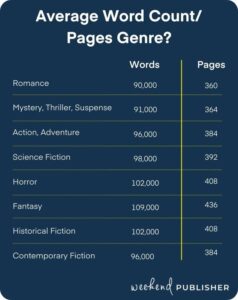
How Long Should a Short Story Be for Different Purposes
Not all short stories serve the same purpose. The required length changes based on where the story will be used.
Short Stories for Literary Magazines
Most literary magazines prefer stories between:
- 3,000 and 6,000 words
They want enough space for character depth and theme. They do not want bloated plots.
Short Stories for Online Platforms
Online fiction tends to favor shorter attention spans. Typical short story length here is:
- 1,500 to 4,000 words
Mobile readers prefer quick emotional payoff.
Short Stories for Writing Contests
Contest rules vary widely. Most fall within this range:
- 2,500 to 7,500 words
Always check individual contest guidelines.
Short Stories for School and Academic Use
Schools usually assign:
- 800 to 2,500 words
The focus here is learning structure, not full literary depth.
If you’re looking for structured samples, here are some book report examples students often use.
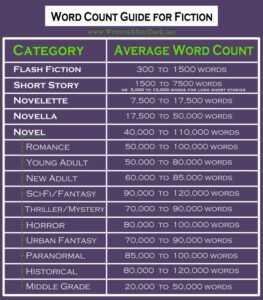
Visual Comparison of Story Length Types
A quick look at how flash fiction, short stories, and novellas compare in word count and structure:
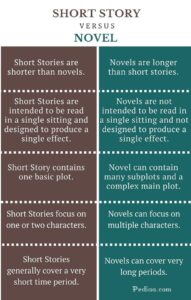
Short Story VS Novel(Visual Representation)
Compare short stories and novels to understand typical word counts and reading time at a glance:
Short Story Length by Genre in 2026
Genre plays a major role in determining how long a short story should be. Some genres need space. Some thrive on brevity.
Literary Fiction
- 3,000 to 6,000 words
Character depth and emotional arc need room.
Romance
- 2,000 to 5,000 words
The focus is on the emotional journey and connection.
Horror
- 1,500 to 4,000 words
Tension works better with tighter pacing.
Science Fiction
- 3,000 to 7,500 words
World-building requires additional space.
Fantasy
- 4,000 to 10,000 words
Complex settings often push the upper limit.
Mystery and Crime
- 2,500 to 5,000 words
Plot clarity and clues must stay tight.
Children’s Short Stories
- 300 to 1,500 words
Young readers need simple structure and fast pacing.
Real Publishing Standards for 2026
Major literary platforms like The New Yorker, Granta, and Clarkesworld Magazine publish strict word limits. Most cap submissions are between 3,000 and 7,500 words.
You can confirm current guidelines on their official websites:
- Clarkesworld Magazine submission guidelines
- The New Yorker fiction submission guidelines
- Granta submission guidelines
If a story falls outside this accepted range, it is often rejected without review. Length is one of the first filters professional editors use in 2026.
Why Short Story Length Matters So Much
Length is not about rules alone. It affects the entire reading experience.
- Too short, and the story feels incomplete.
- Too long and it feels stretched.
- Proper length improves pacing.
- Proper length improves reader engagement.
- Proper length improves acceptance rates.
Editors judge structure, flow, and payoff based on word count. A perfect story at the wrong length still gets rejected.
Also Read: 11 Best Book Printing Services in 2026
Flash Fiction vs Short Story vs Novella
Many writers confuse these categories. Here is a clean breakdown.
Flash Fiction
- 100 to 1,000 words
- Focuses on one moment or twist
- Minimal character development
Short Story
- 2,000 to 7,500 words
- Full character arc
- Clear conflict and resolution
Novella
- 15,000 to 40,000 words
- Multiple subplots
- Deeper world-building
If you are asking how many words in a short story, make sure you are not writing flash fiction by accident.
Also Read: 9 Best Book Marketing Services in 2026
How to Decide the Right Short Story Length
There is no calculator that gives a perfect answer. But there is a simple decision process that works.
Step 1: Define Your Goal
Ask one question first.
Is this story for:
- A magazine submission
- A contest
- An anthology
- A personal portfolio
- A class assignment
The goal defines the word range.
Step 2: Know Your Genre
Fantasy needs more room than horror. Romance needs emotional pacing. Genre always controls length.
Step 3: Identify the Core Conflict
A single moment needs fewer words. A layered conflict needs more space.
Step 4: Write First, Trim Later
Do not force the word count while drafting. Write the full story. Edit afterward.
Editing a Short Story to Meet Word Limits
Many writers struggle once they overshoot the limit. Editing is where professionals win.
Effective trimming methods include:
- Removing repeated emotions
- Cutting long descriptions
- Tightening dialogue
- Combining scenes
- Removing secondary subplots
This is also where professional editors make the biggest impact. Companies like Aspire Book Publishers specialize in refining story structure, tightening pacing, and adjusting short story length to meet real submission standards without damaging voice or depth.
Also Read: 11 Best Book Publishing Companies in 2026
How Many Words in a Short Story for New Writers
New writers often overwrite or underwrite. Here is a safe beginner target in 2026.
- Aim for 2,500 to 4,000 words
- This range fits most submissions
- It allows character growth
- It avoids structural problems
With experience, writers naturally learn when a story needs 1,500 words or 6,000 words. You can even look to the works of famous authors to see how masters of different genres manage their story lengths.
Short Story Length for Ebooks and Digital Publishing
Digital reading has changed expectations. Mobile-first platforms prefer:
- 1,500 to 3,500 words
Readers often finish during a single commute or break. Completion rate matters more than literary scope in digital markets. Writers targeting Kindle Singles or serialized platforms should stay within this shorter range and follow platform-specific formatting rules.
Short Story Length for Audiobooks and Podcasts
Spoken storytelling runs on time, not words. A rough guide:
- 150 to 160 words per minute
This means:
- 15-minute story = 2,250 to 2,400 words
- 30-minute story = 4,500 to 4,800 words
Podcast producers often request stories between 2,000 and 5,000 words for optimal pacing.
Common Myths About Short Story Length
Many myths continue to mislead writers even in 2026.
Myth 1: Short stories must be under 2,000 words
This is false. Most professional short stories exceed that mark.
Myth 2: Longer is always better
Also false. Many award-winning works stay under 4,000 words.
Myth 3: Editors only care about quality
Quality matters, but guidelines still control acceptance.
Myth 4: Readers want long stories
Most modern readers prefer strong, focused storytelling.
How Editors Judge a Short Story
Professional editors review stories in layers.
First layer:
- Does it meet the word count?
- Does it meet genre fit?
Second layer:
- Is the opening strong?
- Is the conflict clear?
Third layer:
- Is the ending earned?
- Is the pacing natural?
A perfect story at an unacceptable length often fails at the first layer.
Examples of Actual Short Story Lengths
Here are real-world approximations used by professional publications.
- Literary award winners often fall between 3,500 and 6,000 words
- Horror anthology stories often average 2,000 to 4,000 words
- Online platform features often target 2,500 to 3,500 words
These examples show that the industry favors balance, not extremes.
How Long Is a Short Story for Children
Children’s fiction is tightly structured.
- Ages 5 to 7: 300 to 800 words
- Ages 8 to 10: 800 to 1,500 words
- Ages 11 to 13: 1,500 to 3,000 words
Short attention spans require faster emotional payoff and simpler plots.
Short Stories in Anthologies
Anthology editors usually request uniform length for layout consistency. Most anthology guidelines fall between:
- 3,000 and 5,000 words
Stories outside that range often get passed, even if well-written.
The Business Side of Short Story Length
Many online platforms pay by the word.
Common payment structures in 2026:
- Literary magazines: $0.05 to $0.15 per word
- Science fiction markets: $0.08 to $0.20 per word
- Online fiction platforms: flat fees based on word count
A 4,000-word story may earn significantly more than a 1,500-word story if published in premium markets.
Why Professional Editing Still Matters
Even when writers hit the perfect short story length, structural issues remain common. These include:
- Weak openings
- Rushed endings
- Uneven pacing
- Excess exposition
That’s why professional editing remains significant in 2026. Aspire Book Publishers’ line, developmental, and submission-preparation services are geared towards making short stories meet the expectations of the real-world market. They focus on making scenes more concise without losing the author’s voice, which is crucial for getting submissions accepted.
How to Trim a Story Without Losing Impact
Trimming does not mean destroying your story. It means sharpening it.
Effective trimming focuses on:
- Removing filler dialogue
- Cutting redundant inner thoughts
- Shortening scene transitions
- Tightening descriptive passages
The result is often stronger storytelling with clearer emotional beats.
How to Expand a Story That Is Too Short
Underwriting is just as common as overwriting.
Ways to expand naturally include:
- Adding internal conflict
- Deepening sensory detail
- Strengthening character motivation
- Extending the emotional resolution
Expansion should add meaning, not padding.
Summary Table: Short Story Length by Purpose
- Flash platforms: 500 to 1,200 words
- Literary magazines: 3,000 to 6,000 words
- Contests: 2,500 to 7,500 words
- Anthologies: 3,000 to 5,000 words
- Children’s fiction: 300 to 3,000 words
Final Thoughts on Short Story Length in 2026
So, how long is a short story nowadays? There are many answers to this question. This is because the word count strongly depends on the purpose of storytelling, the genre, and the market you are targeting, or, more specifically, your target audience. In 2026, most professional short stories fall between 2,000 and 7,500 words. That window gives enough room for emotional depth, conflict, and resolution without exhausting the reader.
If you are a beginner, consider 3,000 to 4,000 words as a very good basic starting point. If you are sending a manuscript for professional submission, then you should always obey the specific guidelines of the publication. In case your story appears to be either too long or too short, professional editing can bring it to the exact market standards while your voice remains strong. The likes of Aspire Book Publishers work with writers to polish the structure, pacing, and word count of their stories so they meet professional-level standards.
At the end of the day, the best short story length is the one that serves your story, satisfies its emotional promise, and fits the platform where it will live.
Reference Link:
Writer’s Digest Short Story Length Guide
Reedsy Word Count Standards
Clarkesworld Submission Guidelines
Penguin Random House Writing Advice