


Chapters look simple from the outside. You turn a page, and there it is. A chapter starts. A chapter ends. But the size? The word count? The rules? Most people have no idea. Some chapters are long. Some are tiny. Some end fast, and some take forever. And yes, it can get confusing, especially if you are writing a book for the first time.
Many new writers ask the same question:
How many words are in a chapter?
And the funny Part? There is no fixed rule. Not even in 2026. But don’t worry. There are common patterns, simple guides, and this blog breaks everything down in the easiest way possible.
Think of chapters like small stories inside a big story. Some need space. Some don’t. Some writers love long chapters. Others write super short ones. Readers enjoy both. Editors are fine with both. And publishers? They just want a clear, clean book that flows well.
In this blog, we will keep every explanation simple. Ready? Let’s break it down.
What Is a Chapter Word Count?
So… what is chapter word count anyway? It sounds like a big, scary writing term, but really, it’s just this:
Chapter word count = how many words are inside one chapter.
That’s it. Nothing fancy and confusing.
A chapter can be short like a text message. Or long like a bedtime story that never ends. Some chapters feel like a sprint. Some feel like a slow walk. Many people think chapters must be long.
Not true. Some of the most famous books have tiny chapters. Some have giant ones. No one is going to chase you if your chapter is 700 words or 3,000 words.
But still, we need some kind of idea. A simple number, a small guide, and something that makes sense and keeps the story clean. Most books in 2026 follow a simple pattern. Not a rule, more like a friendly guideline:
Also Read: 11 Best Book Publishing Companies in 2026
Typical Chapter Word Count
| Type of Chapter | Average Words | Simple Explanation |
| Short chapter | 500–1,000 words | Quick, fast, easy to read |
| Medium chapter | 1,000–2,000 words | Most common size |
| Long chapter | 2,000–4,000 words | Deep scenes, big moments |
| Very long chapter | 5,000+ words | Rare, used for dramatic parts |
See? Not scary at all.
Let’s understand with an example. Consider you’re writing a mystery story.
- Chapter 1: The missing bag (900 words)
- Chapter 2: The strange clue (1,600 words)
- Chapter 3: The big twist (2,800 words)
Different sizes. All is fine and normal. Your chapter word count depends on your story, not a rulebook.
And remember:
If the formatting or structure confuses you, teams like AspireBookPublishers.com can help shape chapters to look clean and professional.
Average Chapter Word Count in 2026
Okay, let’s talk about 2026 numbers. Not boring numbers, but easy, friendly numbers you can actually use. Books in 2026 follow patterns, but nothing is strict. Think of it like choosing how much ice cream to scoop. Some like one scoop. Some like five. Both are valid. Chapter word count works the same way.
Most chapters in 2026 fall into a few common ranges. Writers love these because they feel right. Readers love them because they are easy to follow.
Here’s the simple picture:
Average Chapter Word Count in 2026
| Book Type | Typical Words per Chapter | Why This Happens |
| Children’s Fiction | 300–800 words | Kids read faster in small bites |
| Young Adult | 1,000–1,800 words | Short scenes, fast pacing |
| Adult Fiction | 1,500–2,500 words | Most stories fall here |
| Thrillers & Mystery | 800–1,500 words | Quick, punchy, exciting |
| Epic Fantasy | 2,000–4,000+ words | Big worlds need big chapters |
| Non-fiction | 1,200–2,200 words | Information needs space |
Example
Consider two writers:
Writer A (thriller)
Her chapters are like quick punches. Boom. Boom. Boom. Each chapter contains 1,100 words. Readers fly through them.
Writer B (fantasy)
His chapters feel like long adventures. Walking through forests. Talking to wizards.
Each chapter contains 3,000 words.
Both are right and are normal for 2026.
If your chapter size feels confusing, teams like AspireBookPublishers.com help writers choose good chapter breaks and sizes that match their genre.
Average Chapter Word Count by Genre (2026)
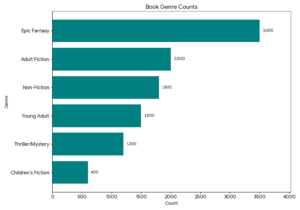
Short bars = quick reads
Long bars = deeper chapters
How Long Should a Chapter Be in Different Genres?
Okay, now let’s go deeper. Because chapter word count is NOT the same for every book.
Different books = different sizes = different vibes.
Think of it like clothes. A hoodie won’t fit the same way on everyone. Chapters work the same way. So let’s see how long chapters usually are in different kinds of books.
-
Fiction (Stories, Novels, Fun Stuff)
Fiction chapters are like mini-movies. Some are fast. Some are slow. Some are one page.
Some are twenty.
But MOST fall in this range:
| Genre | Typical Chapter Word Count | Example |
| Romance | 2,000–4,000 words | Soft scenes, slow moments |
| Mystery | 1,500–3,000 words | Quick chapters keep the suspense |
| Thriller | 800–2,000 words | Short, punchy, fast |
| Fantasy | 3,000–6,000 words | Big worlds, long scenes |
| YA (Teen Books) | 2,000–3,500 words | Easy flow |
So if you’re writing a fiction book and wondering, “How many words in a chapter?”
The answer is: it depends on your vibe.
Example
Imagine you’re writing a mystery book about a missing cat. A chapter where the hero discovers a new clue? Maybe 1,200 words.A chapter where the hero sits and thinks too long? Maybe 500 words.
Fast scenes = small chapters.
Slow scenes = bigger chapters.
-
Nonfiction (Real-Life, Learning Stuff)
Nonfiction chapters are usually longer. Because they teach things.
Here’s the simple range:
| Type | Typical Chapter Word Count | Why? |
| Self-help | 2,500–4,000 | Examples + advice |
| Business | 3,000–6,000 | Case studies |
| Memoir | 2,500–5,000 | Storytelling |
| How-to guides | 1,000–3,000 | Easy steps |
Nonfiction chapters are like “lessons.” So they usually need more words.
Example
Let’s say you’re writing a cookbook. A chapter on “Making the Perfect Pizza”? Maybe 1,500 words. Because nobody wants a 6,000-word pizza talk. But a financial book about “How to Save Money”? That chapter might be 4,000 words. Because money is confusing and important.
-
Children’s Books (Super Short)
Kids get bored fast, like very fast. So kids’ chapters are tiny:
| Age Group | Average Words Per Chapter |
| Early Readers | 100–300 words |
| Elementary (Grade 3–5) | 500–800 words |
| Middle Grade | 800–1,500 words |
Short, simple, fun. That’s the rule.
Average Chapter Word Count by Genre
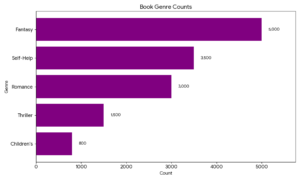
Bigger bars = bigger chapters.
- Comics & Graphic Novels (Yes, They Count Too!)
These chapters are more like scenes. They rely on pictures, not words. Typical chapter word count:
200–1,000 words
That’s it. Because pictures do the talking.
- Webnovels & Online Books
These are super popular now. People read them on phones.
Small screens = short chapters.
Average chapter length is 800–1,500 words.
AspireBookPublishers.com helps new authors choose the right chapter size based on their:
- genre
- target readers
- story style
- publishing plan
They even edit chapters and help format them so they look good on Kindle, print, and everywhere else. So if you ever feel stuck, they can guide you through what “standard” really means.
Also Read: 9 Best Book Marketing Services in 2026
Why Chapter Length Matters (And Why It Also Doesn’t)
Okay, this Part is important. People think there is a magical number like:
“Every chapter must be 2,000 words.”
No a big no.
Here is the truth in the simplest possible way:
- Long chapters = deep moments
- Short chapters = fast action
- Medium chapters = normal reading flow
Readers don’t care about the number. They care about the experience. If the chapter feels slow? Too long.
If the chapter feels confusing? Too short.
That’s the real rule.
How to Decide Your Chapter Word Count
Okay, let’s be real for a second. You can read all the fancy rules in the world. 2,000 words here.
3,500 words there. Blah blah blah. But when you actually sit down to write a chapter?
Your brain goes:
“Uh… how long should this thing even be?”
Because figuring out chapter length is NOT rocket science. It’s more like cooking pasta. You check it, you taste it, and you see if it feels right.
Let’s break this down step by step.
Step 1: Ask Yourself a Silly Question: “What’s Happening Here?”
Every chapter is basically one moment. One scene. One idea. One action.
If your chapter has:
- one big scene → short
- many things happening → long
- a mix → medium
That’s it. That’s the formula. Super unfancy.
Mini Example
Story: Your character loses their dog.
- The moment they realize the dog is gone → 600–900 words
- The moment they search the park → 1,200–1,800 words
- The moment they find a clue → 800–1,200 words
Each moment = one chapter. Different lengths. Different vibes.
Step 2: Think About Your Reader (Are They Kids, Teens, Adults?)
Kids? Short chapters. Teens? Medium chapters. Adults? Any length.
Readers are like phone batteries. Some last long, some don’t.
Quick Table
| Reader Type | Good Chapter Length | Why |
| Kids | 300–800 words | Small attention span |
| Teens | 1,000–2,000 words | Fast but curious |
| Adults | 1,500–5,000 words | Depends on genre |
If you’re writing for adults but want your book to feel “easy,” go for shorter chapters. People love short chapters. Feels faster. Feels lighter.
Also Read: 11 Best Book Printing Services in 2026
Step 3: Look at Your Genre (Different Books = Different Rules)
-
Mystery?
Short chapters keep the tension alive.
-
Fantasy?
Long chapters because of big worlds.
-
Self-help?
Medium length because too-long chapters make people sleepy.
-
Cookbooks?
Short short short.
You can even check a few books online. Just open Amazon and click “Look Inside.”
Boom. You see how long their chapters are.
Step 4: Stop Counting Words While Writing
This is a secret: Don’t measure chapter length WHILE writing. Write the scene. Tell the moment and let the chapter breathe.
Then, when you’re done, check the word count.
If it feels too long, then cut the boring parts. If it feels too short, then add a small scene, an emotion, or a funny moment.
Editing is where the chapter finds its true size.
And guess who can help with editing? Yep, AspireBookPublishers.com. They literally polish chapters and fix pacing so everything feels smooth and professional.
Step 5: Use the “Door Trick” (A Funny But Smart Tip)
Imagine your reader is walking through a hallway. Every chapter is a door. If your chapter is too long, the reader feels trapped. If it’s too short, the reader feels like they’re running.
You want them to walk. Not run. Not get stuck. So after every chapter, ask:
“Would I want to open the next door?”
- If yes → perfect chapter size.
- If no → change it.
Simple mental trick that is super effective.
Average Chapter Length Across 5 Types of Writers
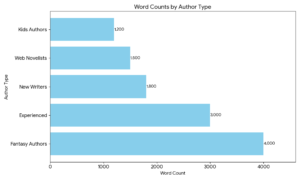
More bars = more words.
Step 6: Look at Your Whole Book Size
This is VERY important. If your book is:
50,000 words → you might have 20–30 chapters
70,000 words → maybe 25–40 chapters
100,000 words → maybe 30–50 chapters
So chapter length depends on:
book size + how many chapters you want
Here’s another table:
| Total Book Words | Chapter Count Avg | Words Per Chapter |
| 40,000 words | 20 chapters | 2,000 each |
| 60,000 words | 25 chapters | 2,400 each |
| 80,000 words | 30 chapters | 2,600 each |
| 100,000 words | 40 chapters | 2,500 each |
See? Chapters are just math. But soft math.
Example
Let’s say you’re writing a YA book with 60,000 words. You want 25 chapters.
So:
60,000 ÷ 25 = 2,400 words per chapter. Now what? Do you FORCE every chapter to be exactly 2,400 words? Nooo. Please no.
Make some:
- 1,600
- 2,800
- 3,200
- 1,900
A little messiness is good. Readers like messy. Life is messy. Books should feel alive, not robotic. That’s why AspireBookPublishers.com always tells new authors:
“Focus on the story. We’ll fix the word count later.”
And honestly? They’re right.
Also Read: 9 Best Book Formatting Services in 2026
Conclusion
So… chapters. They’re tricky. They’re small, big, messy, and sometimes confusing.
But here’s the secret that there’s no perfect number. Some chapters are 500 words.
Some chapters are 5,000. It depends on:
- The genre
- The reader
- The story moment
And honestly, your mood while writing
Short chapters = fast action.
Long chapters = deep scenes.
Medium chapters = steady flow.
Check your book. Check your chapters. Ask yourself:
“Would I keep reading?”
If yes → good. If no → adjust. And don’t stress too much about numbers. Readers care about story, not math.
Pro tip: if you feel lost, AspireBookPublishers.com can help you pick chapter length, break chapters naturally, and polish everything. They make your book look and feel professional without killing your style.If you’re curious about the other aspects that go into a great book, we’ve broken down all the key details in our guide on Average Book Word Count to help you plan your full manuscript.
People Also Ask For
Q1: How many words should a chapter have?
A1: It depends. For fiction: 1,500–4,000 words. Nonfiction: 1,500–3,500. Kids’ books: 300–800. But the key is flow, not exact numbers.
Q2: Can chapters be different lengths in the same book?
A2: Yes! Some chapters can be short for action, some long for world-building. Messy is fine because it feels human.
Q3: Do ebooks and print books need different chapter lengths?
A3: Not really. But short chapters work well for ebooks because readers can finish a chapter quickly on phones.
Q4: How many chapters should my book have?
A4: Depends on total words. Example: a 60,000-word book might have 25–30 chapters.
Q5: Can AspireBookPublishers.com help with chapter word count?
A5: Absolutely. They guide authors on chapter size, pacing, and structure. They polish chapters so your book reads smoothly.
References
Reedsy Blog – How Many Words Should a Chapter Be?
Writer’s Digest – How to Structure Chapters in a Novel
BookBaby – Average Word Count by Genre
AspireBookPublishers.com – Professional Editing & Publishing Services